

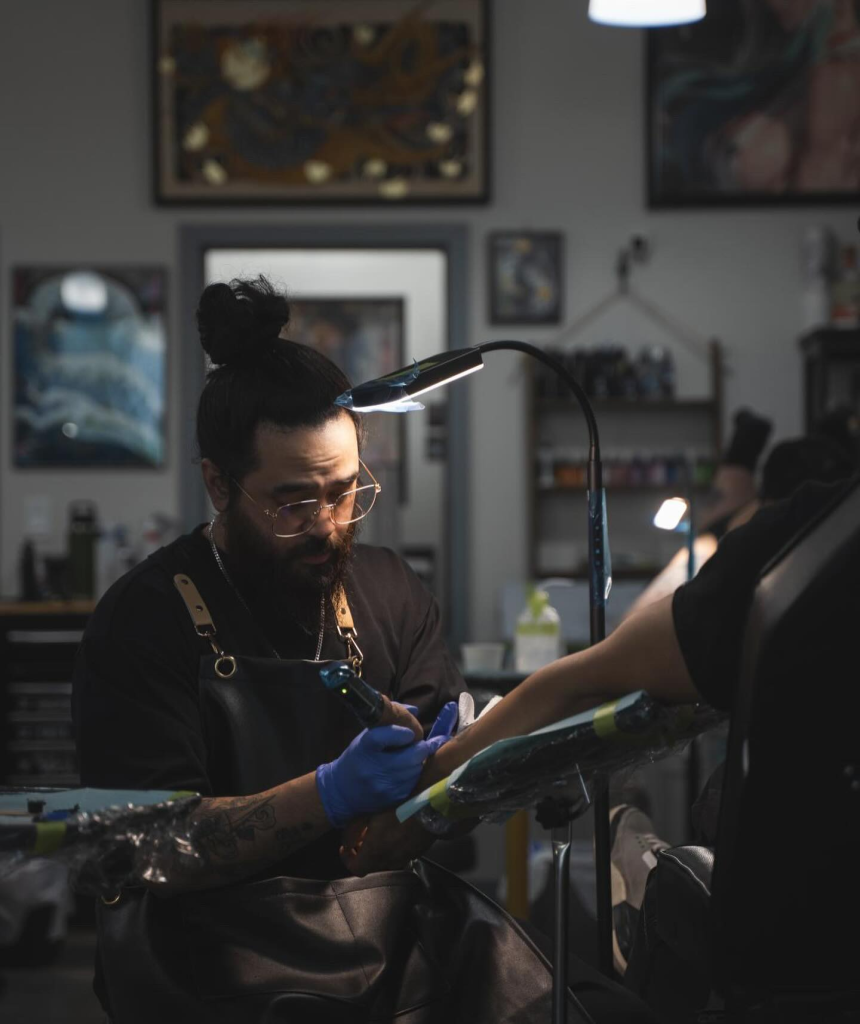
If you’re wondering how much your first tattoo is going to hurt, you’re not alone. It’s the number-one question we get at The Hyve Studio. The honest answer is: it depends on where you get it, but it’s rarely as bad as you’re imagining. This guide breaks down the tattoo pain scale by body location, what actually causes the sensation, and how to make your session as comfortable as possible.
The Most Painful Places to Get a Tattoo
These areas land consistently at the high end of the tattoo pain chart, mostly because they’re bony, thin-skinned, or packed with nerve endings.
Ribcage and Sternum (8–10/10)
The skin here is thin, there’s almost no fat cushioning, and every breath you take moves the canvas. Most people describe it as a sharp, dragging burn. It’s doable; plenty of people get ribcage pieces, but it’s not a first-timer spot.
Hands, Feet, and Fingers (7–9/10)
Lots of nerve endings, bones close to the surface, and skin that moves a lot. Finger tattoos also fade faster because of how much the skin on your hands flexes and sheds, so factor that in before committing.
Inner Arm, Armpit, and Inner Elbow (7–9/10)
The inner bicep and ditch of the elbow have thin, sensitive skin with veins running just underneath. The armpit is even more intense. Nobody enjoys that one.
Spine and Back of the Knee (7–8/10)
The spine sits right over the bone. The back of the knee has thin skin and a lot of flexion points. Both are manageable, but expect to take breaks.
Head, Face, and Neck (7–9/10)
These are high-nerve-ending zones, and the vibration from the machine resonates differently on the skull. Neck pieces near the throat or behind the ear are particularly intense.
The Least Painful Tattoo Spots for First-Timers
If you’re new to this, these areas give you a much more comfortable introduction to the process, and they’re exactly where our artists at The Hyve Studio recommend starting.
Outer Forearm (2–3/10)
This is hands-down the most beginner-friendly spot. There’s decent muscle and fat coverage, the skin is relatively thick, and your arm is still easy to look at and hold steady. A fine-liner tattoo on the forearm is one of the most popular first choices for a reason.
Outer Upper Arm and Shoulder (3–4/10)
Good coverage, not too many nerve endings, and easy for the artist to work on. Shoulder pieces also heal cleanly because the area doesn’t flex as aggressively as joints.
Upper and Mid Back (3–5/10)
Lots of surface area, decent thickness, and a relatively straightforward session. Most clients describe the sensation as a consistent scratch rather than sharp pain.
Calf (3–4/10)
The calf is surprisingly low on the pain chart. Good muscle mass, few nerve endings, and easy for the artist to position. If you want something on your leg but don’t want to deal with the knee or shin, the calf is the call.
Outer Thigh (2–4/10)
One of the lowest-pain zones on the body. Plenty of muscle and fat, and the skin doesn’t move much. Great for illustrative tattoos and larger pieces that need real estate.
Why Tattoo Pain Feels Different Depending on Location
It comes down to what’s underneath the skin. According to research from the University of Alaska Fairbanks on skin anatomy and the integumentary system, skin has three layers: the epidermis, the dermis, and the hypodermis. Tattooing deposits ink into the dermis, the second layer. Areas with thin skin, little fat, or lots of nerve endings deliver that stimulus more directly to your nervous system.
Bony areas hurt more because there’s nothing to absorb the machine’s vibration. Areas with dense muscle and fat, like the thigh or outer arm, act as natural buffers. That’s why the same person can rate a forearm at a 3 and their ribs at an 8.
First Tattoo Tips: How to Prepare for Your Session
Preparation genuinely makes a difference.
Eat a Proper Meal Beforehand
Get a real meal in 2–3 hours before your appointment. Your blood sugar dropping mid-session makes everything worse; you’ll feel light-headed, clammy, and the pain will feel more intense. A solid meal of protein and carbs keeps you steady. Skip alcohol entirely for at least 24 hours before; it thins your blood and makes you bleed more, which affects how the ink sits.
Sleep the Night Before
This sounds obvious, but it matters. A tired body has lower pain tolerance and a harder time staying still. Give yourself the best possible starting point by getting 7–8 hours.
Stay Hydrated
Well-hydrated skin is easier to tattoo. Show up having drunk water consistently through the day, not just a big glass right before you walk in.
Wear the Right Clothing
Think about access. If you’re getting your forearm done, a loose short-sleeve or sleeveless top works. Getting your back done? Wear a button-up you can slip off easily, or a strapless top. Nobody wants to wrestle with a tight collar for a three-hour session.
Talk to Your Artist
This one matters more than anything else on this list. Our artists at The Hyve Studio are used to working with first-timers and want to know how you’re doing during the session. If you need a break, say so. If the sensation is more than you expected in a particular area, we can adjust pacing. Our booking process includes a full consultation so we can walk you through placement, size, and what to expect before we start.
Pain Is Manageable; the Result Is Permanent
Getting tattooed does involve discomfort. We’re not going to tell you otherwise. But the sensation is temporary; it ends when the session ends, and the vast majority of first-timers leave feeling surprised by how manageable it was.
The tattoo pain scale is a useful planning tool, not a reason to talk yourself out of something you’ve wanted for months. Start with a placement that makes sense for your pain tolerance, choose a style that genuinely excites you, and work with artists you trust.
At The Hyve Studio, we’re Fraser Health-approved and built for exactly this kind of first-timer experience. The studio is designed to feel calm, not clinical. Our five resident artists: Bien, Bri, Phil, Christian, and Payton each bring something different to the chair, and all of them are used to walking people through their first session. You can find the right match by browsing the team before you book.
Frequently Asked Questions
The wrist is moderate, typically around a 5–6/10. The outer wrist is less sensitive than the inner wrist, where the skin is thinner, and the veins are closer to the surface. It’s a popular first-tattoo spot despite the moderate discomfort because the pieces tend to be smaller and sessions shorter.
The sharp sensation stops the moment the machine stops. What remains is a tenderness similar to a sunburn, which typically peaks on day 2–3 and fades significantly by the end of the first week. The surface skin peels and itches around days 4–7 as it heals that part is more annoying than painful.
For many people, yes, not because the body builds tolerance, but because you know what to expect. The anticipation of unknown pain is often worse than the experience. Clients who know what the sensation feels like tend to be more relaxed during their second session, and a relaxed body genuinely experiences less perceived pain.
Topical numbing creams (lidocaine-based) can take the edge off for shorter sessions or sensitive areas, but they’re not magic. They wear off over time, and some artists find they affect how the skin takes ink. If you’re considering a numbing cream, talk to your artist before applying anything; some prefer that you don’t use it without checking first.
Key Takeaways
- The outer forearm, outer thigh, and calf are consistently the least painful spots, ideal starting points for first-timers.
- The ribs, hands, feet, and inner elbow sit at the high end of the pain chart, best saved for after you know how your body responds.
- Pain intensity is driven by three factors: nerve density, skin thickness, and how much fat or muscle sits between the skin and bone.
- Eating a full meal, sleeping well, and hydrating before your session make a measurable difference in how you feel in the chair.
- Aftercare isn’t optional. Clean it, moisturise it, protect it from the sun, and don’t soak it until it’s fully healed.
- Tell your artist how you’re doing during the session. Taking breaks is normal and welcomed.