

Pain is one of the most common reasons people hesitate before booking a tattoo. Tattoo numbing cream is a real option, but how well it works, when to use it, and whether your artist can apply it all depend on factors most people don’t know going in. Here’s what you need to understand before your next session.
What Is Tattoo Numbing Cream and How Does It Work?
Tattoo numbing cream is a topical anesthetic applied to the skin before a tattoo session to reduce pain at the surface level. Most formulas contain lidocaine as the active ingredient, sometimes combined with prilocaine, benzocaine, or tetracaine, depending on the product.
These ingredients work by temporarily blocking nerve signals in the skin. The cream is applied under an occlusive wrap, left to absorb for 45–90 minutes, then removed before the session begins. The result is a reduction in surface sensitivity, not a complete elimination of pain.
Can Tattoo Artists Apply Numbing Cream?
In British Columbia, Health Canada classifies many topical anesthetics, including products containing lidocaine above certain concentrations, as regulated products. Some formulations require a prescription, while over-the-counter versions are available at lower concentrations.
Most tattoo artists do not apply prescription-strength numbing agents themselves. What many studios do offer is guidance on over-the-counter options a client can apply at home before arriving, or assistance with applying an OTC tattoo numbing gel on-site where the product is appropriate.
If pain management is a priority for your session, the most practical step is to ask your artist directly before your appointment. A good artist will be transparent about what they offer and what they recommend for your specific piece.
Does Numbing Cream Affect Tattoo Quality?
Some numbing creams, particularly those with vasoconstrictor ingredients, can affect how the skin behaves during a session. The skin may become slightly raised or change in texture, which can make ink saturation less predictable in some cases.
The impact varies by product, skin type, and the style being tattooed. Detailed work like fineline tattoos tends to be more sensitive to skin texture changes than bold black linework. Realism and portrait work can also be affected, since both rely on precise ink layering and consistent skin response, worth discussing with your artist before your session.
Choosing the right numbing cream matters, and your artist should be part of that conversation. Bringing a product to your session without mentioning it beforehand can create avoidable complications.
How Long Does Tattoo Numbing Cream Last?
Most over-the-counter numbing creams for tattoos remain effective for roughly 60–90 minutes after application and removal of the wrap. Prescription-strength formulas like EMLA cream tattoo applications can last slightly longer, but the window is still finite.
For shorter sessions, this is rarely an issue. For larger pieces, sleeves, or back work spanning several hours, the numbing effect will wear off during the session. Once the skin has been opened by the needle, reapplication is generally not possible.
Timing the application correctly is important. Apply too early, and the effect wears off before the session starts. Apply too late, and the skin hasn’t absorbed the product fully. Your artist can advise on timing once you’ve confirmed which product you’re using.
Types of Numbing Cream: EMLA, Lidocaine, and Over-the-Counter Options
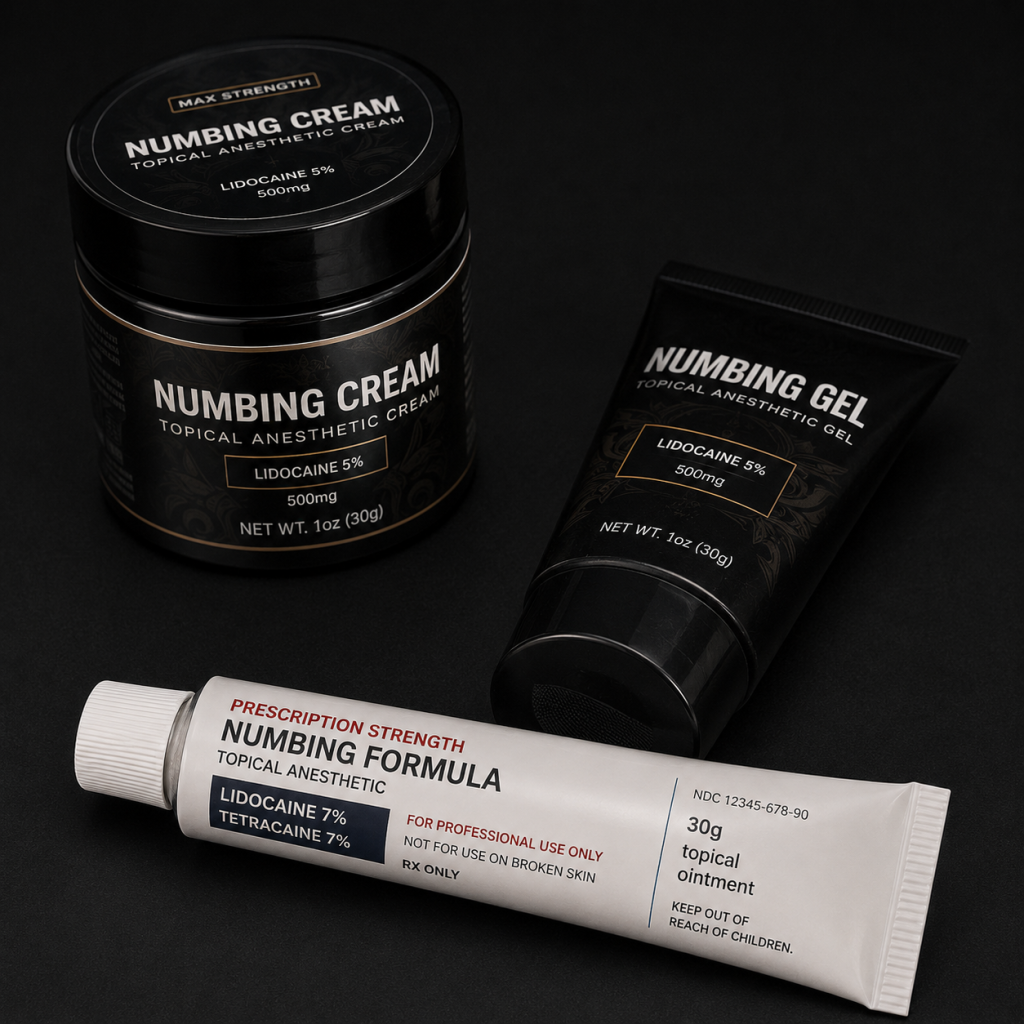
Not all numbing creams are the same. Here’s a breakdown of the main categories:
EMLA Cream
Contains a 2.5% lidocaine and 2.5% prilocaine combination. In Canada, EMLA is a prescription product and a well-documented topical anesthetic widely used in clinical settings for minor procedures. When used for tattoos, it’s applied under occlusion for at least 60 minutes before the session.
Lidocaine-based OTC
Products are available without a prescription at lower concentrations. These include creams, gels, and sprays marketed specifically for tattoo numbing. They vary widely in effectiveness.
Tattoo-specific numbing gels
They are formulated for use on broken skin during a session. These are distinct from pre-session creams and work differently. They’re applied directly by the artist after the skin is opened, and they typically contain a lower lidocaine concentration in a gel base.
If you’re unsure which category applies to your situation, a pharmacist is the right first stop. Health Canada provides guidance on topical anesthetic classifications that can help clarify which products are available without a prescription.
How to Talk to Your Artist About Pain Management
Let your artist know that pain is a concern and ask whether they have a preference for products or timing.
A good artist won’t dismiss the concern. At The Hyve, our team of tattoo artists works through a proper consultation process for every custom piece. Pain management is a reasonable part of that conversation, and we’d rather discuss it upfront than have a client arrive having used a product that affects the session.
A topical anesthetic product can cause skin reactions in some individuals, particularly those with sensitive skin or known allergies to amide-type local anesthetics. Doing a patch test 24 hours before your session is a sensible precaution if you’re using a product for the first time.

Numbing Cream Helps. Your Artist Matters More.
Pain is a real part of the tattoo experience, and there’s nothing wrong with wanting to manage it thoughtfully. Tattoo numbing cream, used correctly and in conversation with your artist, can make a meaningful difference for the right client in the right session.
What it can’t do is replace the skill of an artist who knows how to work with a client, read the room, and pace a session in a way that’s manageable. Technique, experience, and the studio environment all play a larger role in how a session feels than most people expect.
If pain is holding you back from booking, start with the conversation. Book a consultation at The Hyve, and we’ll talk through your piece, your concerns, and what we can do to make the session work for you.
Frequently Asked Questions
1. Can tattoo artists use numbing cream on clients?
In British Columbia, whether and how an artist applies a numbing agent depends on the product and its regulatory classification. Many artists can advise on OTC options and assist with the application of appropriate products. Prescription-strength anesthetics like EMLA require a prescription and are typically self-applied by the client before arriving. Always confirm with your studio ahead of your appointment.
2. Does numbing cream affect how the tattoo heals?
Based on available published literature, properly used OTC topical anesthetics have not been shown to impair wound healing, though individual responses vary. Products that alter skin texture or include vasoconstrictors may affect ink saturation during the session, which can have downstream effects on the healed result. Using a product your artist is familiar with reduces this risk considerably.
3. How do I apply numbing cream before a tattoo?
Apply the cream to clean, dry skin over the area to be tattooed, then cover with an occlusive wrap. Leave it on for the time recommended by the product, typically 45–90 minutes, then wipe the area clean before your session. Coordinate with your artist on timing so the effect peaks at the start of your appointment. Our first-time tattoo guide covers more on what to expect from your session prep.
4. Is numbing cream safe for tattooing?
For most healthy adults, OTC numbing products used as directed carry low risk, though individual skin reactions are possible. The Canadian Dermatology Association recommends a patch test for anyone with sensitive skin or unknown reactions to local anesthetics. Avoid applying to broken skin, mucous membranes, or large surface areas beyond the tattooed zone, and check with a pharmacist or physician if you have any medical conditions or take regular medications.
5. What numbing cream do tattoo artists recommend?
Recommendations vary by artist and studio. Many artists are familiar with EMLA cream for pre-session use and specific lidocaine-based tattoo numbing gels for mid-session application on broken skin. Asking your artist directly is the most reliable approach, as they can factor in your skin type, the placement, and the style of work being done.
Key Takeaways
- Tattoo numbing cream contains topical anesthetics, most commonly lidocaine, which temporarily reduce surface-level skin sensitivity before a session.
- Some numbing creams can affect skin texture and ink saturation, particularly for detail-heavy styles. Discussing your product choice with your artist in advance avoids complications.
- Most numbing creams remain effective for 60–90 minutes. For longer sessions, the effect will wear off and cannot be reapplied once the skin is open.
- Pain management is a legitimate part of the consultation conversation. Bring it up before your appointment, not on the day.
- Numbing cream is most useful for first-timers, clients with high pain sensitivity, or those getting work done in particularly sensitive locations.