

When it comes to tattoo designs for men, arm placement is by far the most requested, but the style you choose, how you plan the build, and which artist you work with all make a significant difference to how the piece holds up over time. This guide covers the main styles that work well on arms and sleeves, how to think about placement, and what the process actually involves.
Table of Contents
- Why Arms Are the Most Common Starting Point
- Styles That Work Well for Arm and Sleeve Tattoos
- A few things to know before choosing this style:
- Forearm, Half-Sleeve, or Full Sleeve?
- How to Pick a Style That'll Still Look Right in 20 Years
- Ready to Plan Your Next Piece?
- Frequently Asked Questions
- Key Takeaways
Why Arms Are the Most Common Starting Point
Arms offer something most placements don’t: canvas space and visibility in equal measure. You can show the work off or cover it up, depending on the room you’re walking into.
The anatomy helps too. Arms have natural contours: the forearm tapers, the bicep curves, the shoulder rounds, and a skilled artist uses all of that to their advantage. Flat designs translate differently when they wrap around a limb, and the best tattoo designs for men account for that movement from the very first sketch.
For anyone thinking about long-term collecting, the arm is also a scalable starting point. A single forearm piece can stand alone today or anchor a tattoo sleeve down the track; you’re not locking yourself into anything beyond what you’re booking now.
Styles That Work Well for Arm and Sleeve Tattoos
Style choice affects everything: session count, how the piece interacts with your skin tone, and how it holds up over the years. These are the styles most commonly requested for arm and sleeve builds.
Greyscale and Black and Grey
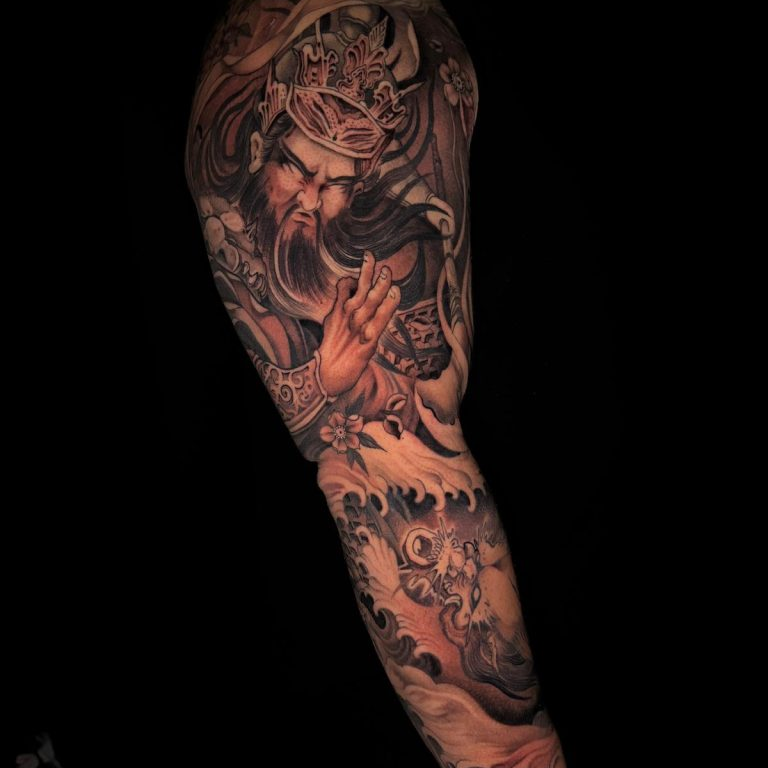
Greyscale tattooing uses shading and contrast rather than colour to build depth. It suits a wide range of subject matter: portraits, nature, architecture, abstract compositions, and because there’s no colour saturation to fade, it ages more predictably than most colour work.
On sleeves specifically, tonal variation across a large surface creates visual interest without needing colour contrast to carry the composition. It tends to look as strong in 20 years as it does when freshly healed.
Realism

Realism tattoos aim to replicate photographic detail on skin: portraits, animals, and objects rendered with dimensional shading and precision.
A few things to know before choosing this style:
- It’s technically demanding. The margin for error is narrow, and results vary significantly between artists.
- Look for artists who specifically specialise in realism, not generalists who offer it as one of many styles.
- For sleeves, realism works best as a centrepiece, one or two strong panels anchoring the composition, with complementary styles around them.
- Full realism sleeves require consistent sessions with the same artist to maintain visual coherence.
Black Linework
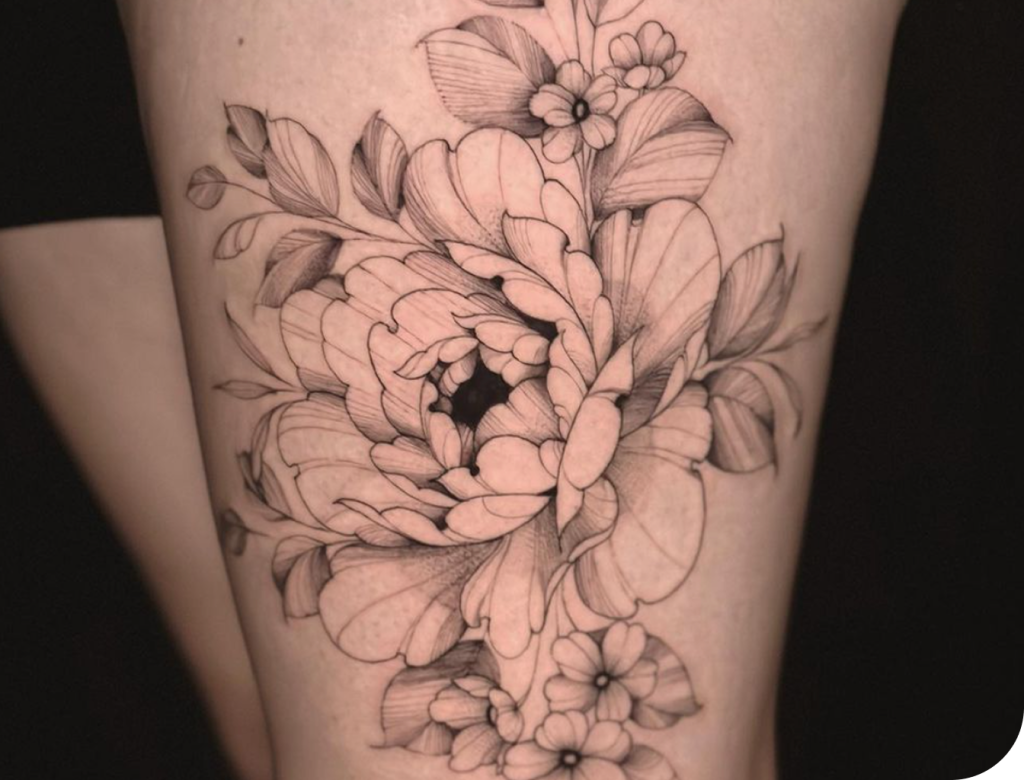
Bold, graphic, and high-contrast. Black linework covers a wide range of geometric patterns, tribal-influenced designs, illustrative outlines, and abstract shapes. It heals cleanly, reads well from a distance, and ages predictably because there’s no gradual ink migration softening edges the way shading can.
It’s a strong choice for anyone who wants visual impact without the complexity of a multi-session shading or colour build. Simpler linework pieces can often be completed in a single session.
Illustrative

Illustrative tattooing sits between linework and fine art designs that look hand-drawn, with varying line weights, loose shading, and an editorial or sketchbook quality. The style is broad enough to cover almost any subject matter, from botanical to dark fantasy to portraiture.
On a sleeve, illustrative work connects individual elements naturally. Its tolerance for varied compositions also makes it one of the more forgiving styles for gradually building a sleeve over multiple sessions.
Neo-Asian and Anime

Neo-Asian draws on traditional Japanese and broader East Asian visual traditions: dragons, koi, peonies, waves, oni, tigers, reinterpreted with contemporary technique. It’s one of the oldest sleeve traditions in tattooing, with well-developed compositional conventions for how elements flow across a full arm.
Anime applies the visual language of Japanese animation to skin: fan art, original character designs, scenes rendered with the colour palette and line style characteristic of the medium. Both styles benefit from artists with genuine familiarity with the source material, not just technical skill, but an understanding of the visual grammar that makes the style read as authentic rather than approximate.
Forearm, Half-Sleeve, or Full Sleeve?
The scope you choose affects session count, budget, and how long you’ll be committed to the project.
Forearm pieces are the most common starting point for arm tattoos for men. Visible, versatile, and manageable in scope, most forearm pieces are achievable in one to three sessions, and a well-designed piece can stand alone or anchor a larger build later.
Half-sleeves cover either the upper arm (shoulder to elbow) or lower arm (elbow to wrist). They require more upfront planning than a standalone piece but give you room to build a cohesive composition without committing to the full project. For arm tattoos for guys who want real impact without years of sessions, the half-sleeve is often the sweet spot.
Full sleeves are long-term projects, multiple sessions spread over months or longer, depending on complexity. The key is having a coherent concept before the first session. Sleeves built piece-by-piece without a plan often end up stylistically inconsistent, with gaps that are difficult to fill later. Good sleeve tattoos for men take as long as they take; rushing it produces work you’ll regret.
How to Pick a Style That’ll Still Look Right in 20 Years
Trends in tattooing move fast. Some styles that felt fresh five years ago are already looking dated.
Fine Lines Fade
Single-needle and ultra-fine linework looks precise when fresh but can soften significantly over time, particularly in areas with sun exposure or regular skin movement. Touch-ups may be part of the long-term picture.
Colour Shifts
Bright colour fades and shifts tone as it ages. Lighter colours and whites are the most vulnerable; darker, more saturated tones hold better. If longevity is a priority, black and grey or a limited darker palette will age more predictably.
Subject Matter
Most tattoo regret comes down to design choice rather than execution, picking something that felt current rather than personally meaningful. A design connected to something specific tends to hold its meaning in a way trend-driven choices don’t.
Style-Match Your Artist
Every style has specialists, and the quality gap between a generalist and a specialist is significant. Look for an artist whose portfolio is built around the style you want, not one who offers it as a side option.
Check Health and Safety Compliance
In BC, reputable studios follow Fraser Health standards for sterilisation, single-use equipment, and studio hygiene. Confirming a studio’s compliance status before booking is a straightforward due diligence step, particularly for a first tattoo.
Ready to Plan Your Next Piece?
If you’ve been sitting on an idea, a consultation is the most useful first step; it’s where placement, sizing, and style all get worked through before anything is finalised.
Book a consultation at The Hyve →
Frequently Asked Questions
1. Which arm tattoo styles age the best?
Black and grey work and bold black linework tend to age most predictably; they don’t rely on colour saturation, so fading is less visible over time. Fine linework and bright colour work can still look excellent long-term with proper aftercare and touch-ups, but the maintenance expectation is higher.
2. Will a forearm tattoo affect my professional life?
Depends entirely on your industry and workplace. Forearm tattoos are easy to cover with long sleeves, but visible in short sleeves. Most professional environments have become more accepting of tattoos over the past decade, but some client-facing roles still have expectations around visible body art. Worth thinking through before placement.
3. Can I mix styles across a sleeve?
Yes, patchwork sleeves are an established aesthetic rather than a mistake. The difference between one that works and one that doesn’t is usually a unifying element: a consistent colour palette, a shared theme, or complementary imagery. Completely unrelated styles with no connective tissue can look unplanned rather than intentional.
4. How do I find an artist who specialises in the style I want?
Search by style, not by studio. Most tattoo artists maintain Instagram accounts with recent work; this is the most current and honest view of their output. Look specifically for healed work in their feed, not just fresh pieces. If you can’t find healed examples, ask before booking.
5. What should I do to prepare for a longer session?
- Eat a proper meal beforehand blood sugar drops during long sessions and makes the experience significantly harder
- Wear or bring clothing that gives easy access to the area being tattooed
- Stay hydrated throughout the day
- Avoid alcohol for at least 24 hours before, as it thins the blood and affects how the skin holds ink
- Don’t push through discomfort to avoid asking for a break. Most artists build breaks into longer sessions anyway
Key Takeaways
- Arms are a practical starting placement for arm tattoos for men, with good surface area, manageable pain, and easy to extend into a larger build over time.
- Style choice affects longevity as much as aesthetics. Black and grey and bold linework age more predictably than fine lines or heavy colour.
- Full sleeves are long-term projects. A coherent concept worked out before the first session produces a significantly stronger result than building without a plan.
- Healed portfolio work is a more reliable indicator of an artist’s quality than fresh pieces. Always look for both before booking.
- The most common source of tattoo regret is design choice, not execution; prioritise personal meaning over what’s trending.
- Proper aftercare and ongoing sun protection have a direct impact on how long tattoo designs for men hold their quality over time.